This season’s fashion is reflected as much in the runway shows as in regulatory texts. Since July 19, 2026, the European Union has prohibited large companies from destroying unsold clothing and shoes, a measure that concretely pushes brands towards resale, donation, and repair. This shift modifies the collections offered in stores and, by extension, the fashion trends available to consumers this season.
European textile regulation: what changes in the aisles
The ESPR framework (Ecodesign for Sustainable Products Regulation) does not only concern manufacturers. It reshapes the available offer. The ban on destroying unsold items forces retailers to better calibrate their production volumes and to favor pieces whose lifespan justifies the investment.
At the same time, the Digital Product Passport, whose textile deployment is announced to start in 2027, will require each garment to have a traceability sheet (composition, reparability, end of life). Brands are already anticipating this requirement by simplifying their ranges and focusing on materials with documentable origins.
To track the evolution of pieces that fit this logic, specialized platforms like the site www klottra com mode aggregate references by style and season, allowing for comparisons of cuts and materials before making a purchase.
The extended producer responsibility (EPR) for textiles is also becoming a harmonized obligation across the EU, beyond the existing French framework. Field reports vary on the exact timeline for compliance according to member countries, but the direction is clear: each garment must prove its environmental legitimacy.
Structured cuts and wide pants: the autumn 2026 silhouette
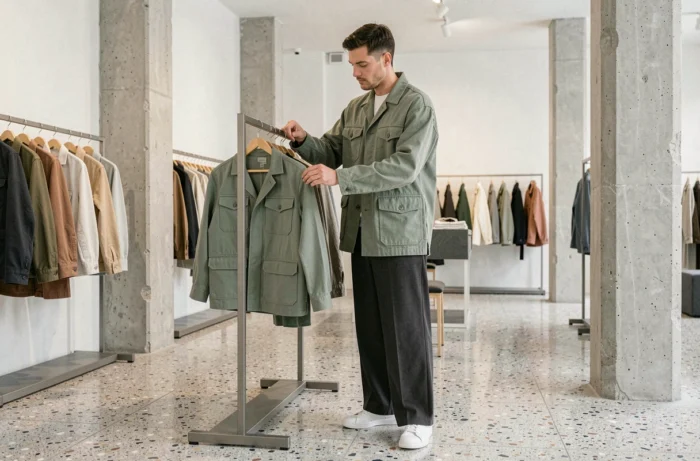
Structured wide pants dominate this season’s offerings. With a defined waist, ample fall, and sharp cut, this piece merges comfort and elegance without compromise. It pairs well with both minimalist shoes and a pair of boots.
The coordinated set (matching top and bottom) emerges as an alternative to the classic suit. It simplifies the composition of a look while producing an immediate visual effect. Monochrome versions, worn tone-on-tone, allow for playing with accessories to personalize the outfit.
Flowy long dress: a key piece in the wardrobe
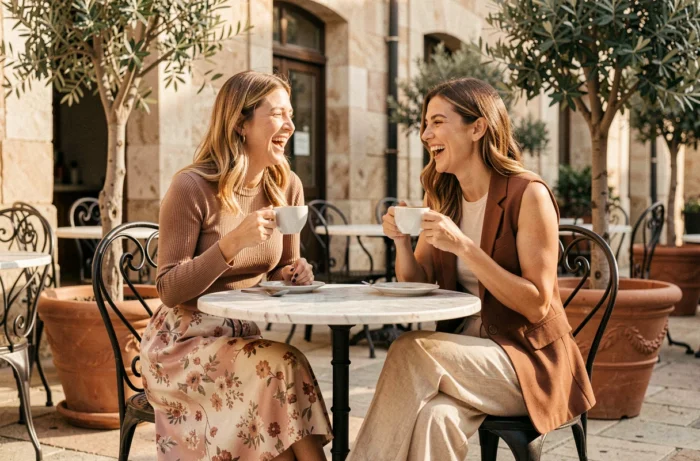
The flowy long dress remains the most versatile piece of the season. It now comes in more opaque autumn versions, made from natural materials like thick linen or fine wool.
This cut suits the majority of body types, which explains its longevity in collections. However, the quality of the fabric makes all the difference: a flowy dress made from synthetic material loses its drape after a few washes, while a natural fabric retains its structure.
Seasonal colors: beyond beige and black
This season’s palettes are organized around two axes. The first remains anchored in natural shades (beige, olive green, off-white), consistent with the trend towards traceable materials. The second leans towards bold colors that stand out against the autumn gray.
- Red remains a key color, worn in a total look or as a standout piece against a neutral base. It structures an outfit without requiring flashy accessories.
- Shades of green, from lime to emerald, work in layers (jacket over sweater, scarf over coat) to add depth without overwhelming.
Choosing a strong color for a single piece is enough to refresh an existing wardrobe. Replacing a basic top with a colorful version changes the overall look of an outfit without requiring a complete rethink.
Materials and sustainability: what traceability changes for style
Silk, linen, and wool are returning to the center of collections, partly because these natural fibers are easier to document under the future Digital Product Passport. Synthetic materials are declining in mid-range and high-end lines.
Denim remains a safe bet, but cuts are evolving. The barrel jean (flared leg and high waist) is establishing itself as the reference cut. Leather is being reinvented in a lighter version, often lined with linen to enhance breathability without losing structure.
Expressive accessories: an underestimated lever
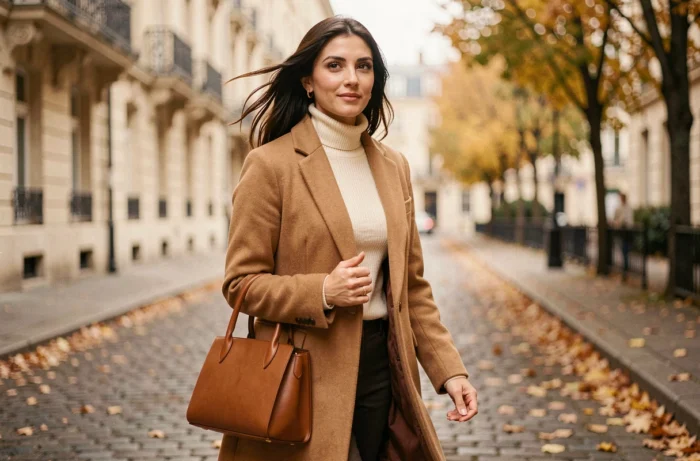
Brooches, statement belts, and bags with unusual volumes are replacing the discreet jewelry of previous seasons. This trend towards expressive accessories allows for transforming a minimalist wardrobe without purchasing new basic pieces. A well-chosen accessory extends the perceived lifespan of a wardrobe.
Shoes follow the same logic: black boots remain the foundation, but square-toed or thick-soled models are taking precedence over pointed shapes. Online searches confirm a growing interest in versatile models, suitable for both the office and evening outings.
Autumn 2026 fashion trends: balancing style and coherence
Following fashion trends this season is less about accumulating pieces and more about balancing what already exists in your wardrobe with a few additions that will make a difference. Wide pants, a flowy dress, and a strong accessory cover most situations.
The regulatory pressure on brands is pushing collections towards more durable and better-documented pieces. For buyers, this translates into tighter ranges, more natural materials, and slightly higher prices in the mid-range. The available data does not yet allow for measuring the exact impact of the ESPR framework on retail prices, but the trend is underway.
Focusing on three or four well-chosen pieces rather than a complete wardrobe overhaul remains the most reliable strategy, this season and beyond.