Pain in the buttocks while sitting is rarely caused by a single factor. In clinical practice, there is a persistent tendency to attribute this symptom to piriformis syndrome or disc-related sciatica, while several underdiagnosed anatomical structures produce nearly identical presentations. This article targets specific diagnostic pitfalls and therapeutic levers that are less covered by mainstream literature.
Ischiocondylar Adductor Magnus Injury: The Forgotten Differential Diagnosis
An unknown cause of buttock pain while sitting involves the ischiocondylar portion of the adductor magnus. This bundle inserts on the ischial tuberosity, exactly where the patient localizes their discomfort when sitting.
A clinical case published in the Journal of Ultrasound in Medicine (2024) describes a partial tear of this portion, with marked pain under the buttock aggravated by prolonged sitting. The presentation was incorrectly attributed to hamstring tendinopathy, then to ischial bursitis.
High-resolution ultrasound imaging revealed focal structural abnormalities at the ischial insertion, with inflammatory changes and bursitis effusion. This diagnosis requires a targeted ultrasound examination that the majority of first-line assessments do not include. If the pain persists despite conventional treatments for the piriformis or hamstrings, we recommend following the advice from Santé Quotidienne and referring for dedicated musculoskeletal ultrasound.

Proximal Hamstring Tendinopathy and Prolonged Sitting Pain
Proximal hamstring tendinopathy is the leading cause of chronic sciatic pain in sedentary individuals. Direct compression of the ischial tuberosity on a hard surface exactly reproduces the injury mechanism: prolonged compressive load on a suffering tendon.
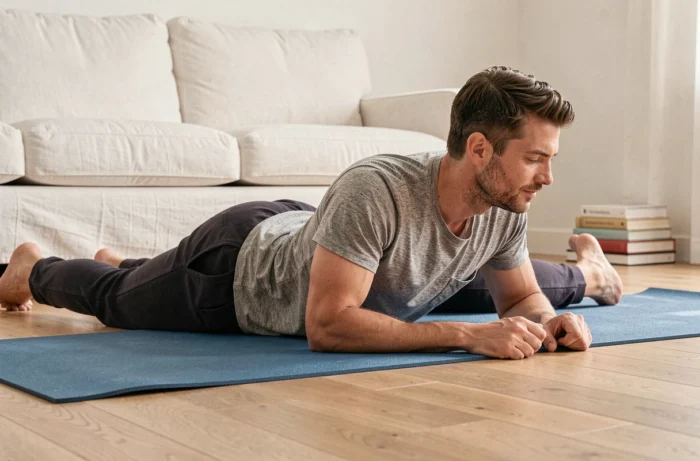
The diagnostic pitfall lies in the radiation of pain. This tendinopathy frequently radiates to the back of the thigh, mimicking truncated sciatica. The discriminating clinical examination remains deep palpation of the ischium in the prone position, combined with a resistance test in knee flexion.
Why Standard MRI Is Not Always Sufficient
Standard MRI sequences of the pelvis do not systematically target the proximal insertion of the hamstrings. We recommend explicitly requesting fine axial cuts centered on the ischial tuberosity. Tendon thickening with peri-tendinous fluid signal confirms the diagnosis.
Treatment relies on a gradual reduction of compressive load (ischial unloading cushion, alternating sitting and standing), combined with a progressive eccentric strengthening program over several months.
Compression of the Sciatic Nerve by Proximal Hamstrings: Beyond the Piriformis
Piriformis syndrome monopolizes attention when discussing sciatic nerve conflict in the buttock region. However, a case reported in the Journal of Orthopaedic Case Reports (2026) describes entrapment of the sciatic nerve by proximal hamstrings, presenting as recurrent episodes of muscle injury in a professional football player.
This proximal entrapment mechanism produces deep buttock pain aggravated by sitting, sometimes with paresthesias along the sciatic pathway. The distinction from piriformis syndrome relies on:
- The precise location of the pain, lower and more lateral than in classic piriformis syndrome, centered on the ischial tuberosity rather than along the piriformis muscle pathway
- Specific aggravation during resisted knee flexion movements (direct solicitation of the hamstrings), absent in pure piriformis syndrome
- The absence of pain reproduction during resisted external rotation maneuvers of the hip (Freiberg test), typically positive in piriformis syndrome
This differential diagnosis remains underexplored in popular articles, which amalgamate all buttock pain with sciatic compression under the label “piriformis.”
Postural Factors and Prolonged Sitting: What Ergonomics Alone Cannot Solve
An ergonomic cushion does not treat an established tendon or nerve pathology. We regularly observe patients who have invested in expensive seating equipment without improvement because the underlying structural problem has not been identified.
Ergonomics serves as a complement to treatment, not a replacement. The points to check simultaneously include:
- The pelvic tilt while sitting: excessive retroversion increases pressure on the ischial tuberosity and shortens the hamstrings, worsening any proximal tendinopathy
- The duration of continuous sitting periods: beyond 45 minutes without interruption, the cumulative ischial pressure exceeds the tolerance threshold of a weakened tendon
- The height of the seat relative to femoral length: a seat that is too low forces hip flexion beyond 90 degrees, increasing tension on the sciatic nerve and the piriformis
Combined Treatment: The Sequence That Works
The protocol we favor first combines a precise diagnosis (targeted ultrasound or MRI), then a progressive eccentric strengthening program for the hamstrings and gluteus medius, and finally an ergonomic adaptation of the workstation. The order matters: adapting the seating without correcting the muscular imbalance amounts to treating the symptom.
Rehabilitation of the gluteus medius deserves special attention. A deficit in this muscle alters load distribution on the pelvis while sitting and promotes overload of the medial (adductor magnus) and posterior (hamstrings) structures. Unipodal loading exercises, progressive over several weeks, remain the reference.
Pain in the buttocks while sitting often conceals a more precise problem than just a “tight muscle.” Before multiplying piriformis stretches, a targeted assessment of the ischial tuberosity and proximal hamstrings allows for avoiding months of inappropriate management.