The French furniture market is experiencing a prolonged contraction period. Meuble Info reports a decline of 6.1% in July 2026 compared to July 2025, and a decrease of 3.2% over the first seven months of the year.
In this context, choosing furniture and designing interiors in 2024-2025 is no longer just about following a color palette or a decorative style. Decisions now focus on longevity, cost of use, and the actual compatibility of pieces with the available space.
Furniture Market in France: What the Declines Reveal About Purchasing Choices
The continuous decline of the furniture market since 2023 is changing buyers’ decision-making criteria. The entry price is no longer sufficient: the durability of the product, its ability to integrate into an existing setup, and its resale value weigh more than they did three years ago.
| Purchase Criteria | Priority 2021-2022 | Priority 2024-2026 |
|---|---|---|
| Style / visual trend | High | Medium |
| Purchase price | High | High |
| Longevity / sturdiness | Medium | High |
| Resale value (second-hand) | Low | Increasing |
| Modularity / space-saving | Medium | High |
This table reflects an observable shift in purchasing behaviors: furniture is becoming an investment to amortize, not a seasonal accessory. Brands offering ranges on maison-du-meuble.fr incorporate this logic by highlighting collections designed to last through several decoration cycles.
The rise of function/longevity/price considerations also means that buyers are comparing more before finalizing an order. The average reflection time is increasing, and the use of physical showrooms to test material quality is regaining importance.
Second-Hand Furniture: A Full-Fledged Design Lever
Second-hand furniture now represents a significant share of the furniture market in France. This phenomenon goes beyond mere cost savings. Specialized digital platforms facilitate the circulation of quality pieces, and upcycling (creative refurbishment) is becoming a common practice in interior design projects.
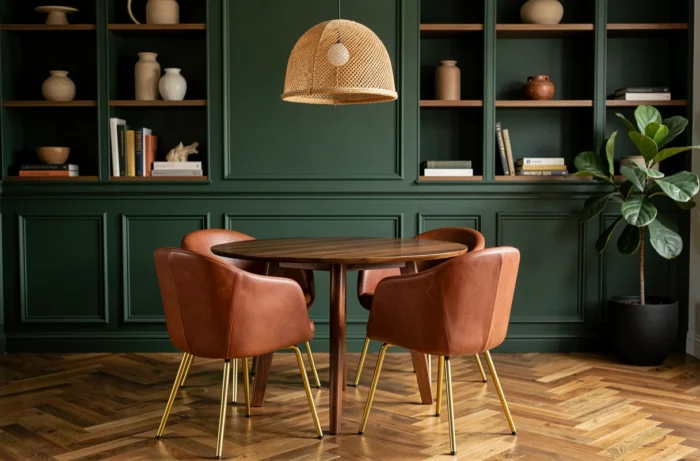
In practical terms, the mix of new/second-hand becomes a design decision. A new sofa paired with a vintage or refurbished dining table produces a result that is both coherent and personal. This mixed approach allows for budget allocation on high daily use items (bedding, seating) while accepting second-hand for decorative elements or storage.
Points of Caution Regarding Second-Hand Furniture
- Check the structural condition of joints (tenons, screws, hinges) rather than the surface appearance, which is often easy to restore.
- Favor solid wood species (oak, beech, walnut) that can withstand multiple cycles of sanding and finishing, where melamine panels cannot be repaired.
- Ensure that the dimensions match the intended room: an antique piece with generous proportions can overwhelm a small contemporary living room.
Sustainable Materials and Modular Furniture: The Two Criteria Shaping Choices in 2024
The furniture trends of 2024 converge on two measurable axes. The first concerns materials: certified wood, recycled metal, and low-impact textiles are gradually replacing plastic finishes or panels made with high-emission adhesives. This shift responds to both environmental expectations and economic calculations, as a furniture piece made from sustainable materials retains its resale value better.
The second axis focuses on modularity. In a context where living spaces remain constrained, transformable furniture (extendable tables, convertible sofas with integrated storage, repositionable shelves) is gaining ground. Interior decoration is no longer limited to choosing a style: it incorporates a reflection on the versatility of each piece of furniture.
Solid Wood vs. Particle Board: A Cost Gap That Narrows with Use
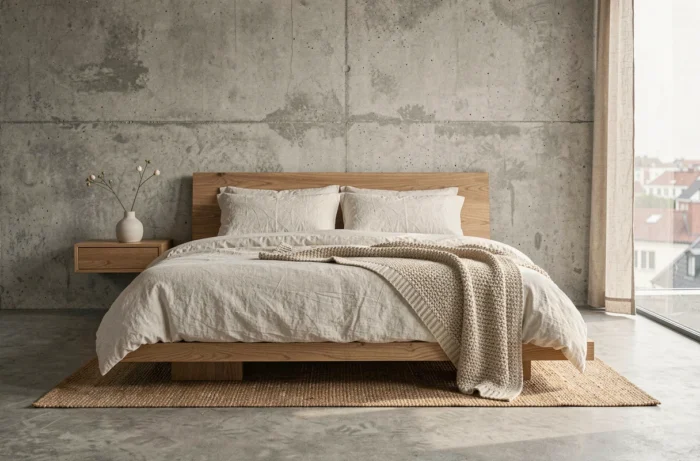
The purchase price of solid wood furniture exceeds that of an equivalent in particle board. Its lifespan is significantly longer, and it withstands repairs. When calculated by the cost per year of use, solid wood often turns out to be cheaper than particle board that needs replacing every five to eight years.
This reasoning particularly applies to living room furniture and bedroom storage, which are used daily. For pieces with occasional use (occasional tables, entry consoles), high-quality particle board remains an acceptable compromise.
Colors and Interior Design 2024: Sobriety as a Backdrop
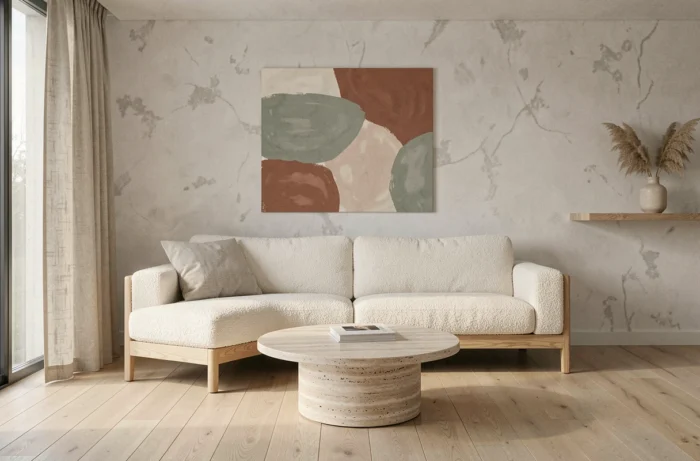
The dominant palettes of 2024 lean towards neutral and warm tones (terracotta, beige, sage green) that serve as a backdrop for more assertive furniture pieces. This approach facilitates changes in ambiance without the need to repaint or completely refurnish.
Biophilic design, which incorporates natural elements (plants, raw materials, natural light) into the layout, remains present in projects. It translates into choices of furniture with matte finishes, curved lines, and visible textures (wood grain, apparent weaving).
- Saturated shades (Klein blue, bright orange) work as accents on an accessory or an occasional chair, rarely on a centerpiece.
- Furniture with rounded shapes (curved sofas, oval tables) is asserting itself against strictly geometric lines.
- Matte and textured finishes are replacing glossy lacquer, including in kitchens and bathrooms.
Interior design in 2024 is primarily understood through market data: declining volumes, rising second-hand sales, and a search for longevity. Aesthetic trends exist, but they are framed within a context where each furniture purchase is weighed more carefully. Investing in solid materials, accepting the new/second-hand mix, and prioritizing modularity constitutes a more reliable design strategy than simply following a color of the year.