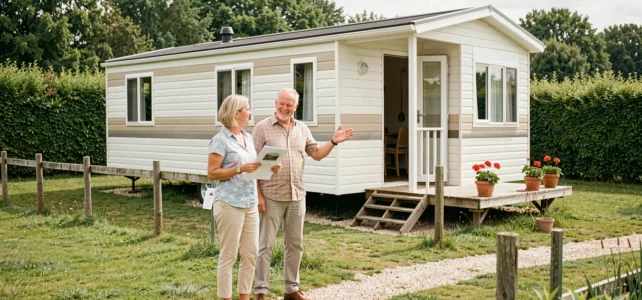
A mobile home is not purchased like a traditional real estate property, and Vendée has legal particularities that many buyers discover too late. The distinction between a plot in a residential leisure park and a camping site determines the entire arrangement: real rights on the land, taxation, resale capacity. Buying a plot of land with a mobile home in Vendée without mastering this framework exposes one to costly administrative blockages.
Plot in PRL or camping site: the legal status of the land changes everything
We observe a persistent confusion between two radically different situations. In a residential leisure park (PRL), the buyer can obtain ownership rights on the land or, failing that, a long-term lease. This status provides legal stability that allows for free resale, inheritance transmission, and the realization of developments (terrace, fence, garden shed) within the framework of the park’s regulations.
In camping, the situation is quite different. The operator remains the owner of the land. The buyer of the mobile home signs a renewable annual site contract, which means they may be forced to move their property in case of non-renewal. Developments are subject to the manager’s agreement, and resale often occurs under conditions imposed by the camping site.
Before any search for sale of a plot of land with a mobile home in Vendée, we recommend checking whether the offer concerns a PRL with land transfer or a simple rental site. The displayed purchase price does not reflect the same patrimonial reality in both cases.
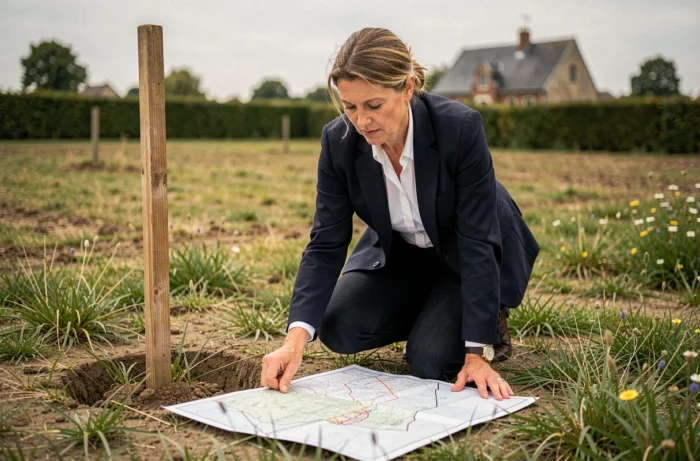
Private non-buildable land and mobile homes: a prohibition reinforced by the Urban Planning Code
Article L.111-42 of the Urban Planning Code reserves the installation of mobile leisure residences for campings, PRLs, and classified holiday villages. Any installation on private non-buildable land is illegal, even if presented as temporary or seasonal.
The sanctions provided for in Article L.480-4 include a fine calculated per square meter and an obligation to restore the land. In Vendée, where land pressure on the coast pushes some sellers to offer agricultural or natural lands with a mobile home already installed, the risk is real.
We notice that ads circulate with ambiguous phrases like “leisure land with mobile home.” If the land does not fall under a classified structure, the buyer exposes themselves not only to an administrative procedure but also to the impossibility of legally connecting to utilities (water, electricity, sanitation).
Seasonal camping or open year-round in Vendée: impact on the actual use of the mobile home
The distinction between seasonal camping and year-round camping determines the allowed duration of occupancy. A seasonal camping site generally closes for several months a year, which prohibits any presence on-site outside the operating period.
- In year-round camping, occupancy can be continuous, but the mobile home remains a leisure residence, not a home. The address cannot serve as a primary tax domicile.
- In seasonal camping, the buyer must anticipate the winter storage of the mobile home or accept that it remains on-site without access to infrastructure (water cut off, electricity suspended).
- Annual charges vary significantly depending on the mode of operation: a site in a camping open all year generates higher operating costs (security, maintenance of common areas, utilities).
For regular use outside the summer season, we recommend targeting exclusively structures open twelve months, checking in the contract the list of services maintained during the off-peak period.
Contractual points of vigilance before purchasing a mobile home on a plot in Vendée
The camping site contract deserves a line-by-line reading. Several clauses determine the profitability and sustainability of the investment.
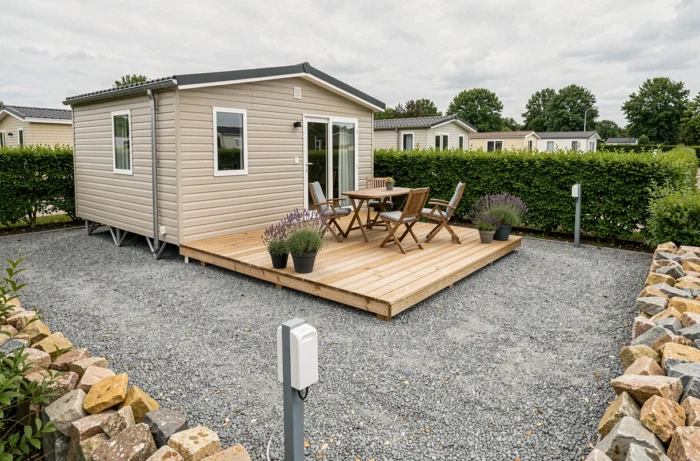
- Subletting clause: some campings prohibit or strictly regulate the rental of the mobile home by its owner. Others require using their own booking center, with a commission that reduces rental yield.
- Duration and renewal conditions: a tacitly renewable annual contract offers no guarantee beyond the current year. Check if there is a multi-year commitment from the manager.
- Resale conditions: the camping may impose a right of preemption, a cap on the resale price, or the obligation to go through a designated intermediary.
- Maximum age of the mobile home: many campings refuse models beyond a certain age and require replacement, which represents a significant cost.
In PRL, these constraints are generally more flexible since the owner holds a right to the land. The negotiation margin on developments and rental management is broader.
Applicable taxation
A mobile home is not subject to property tax since it retains its mobility (wheels, chassis). However, the housing tax on second homes may apply if the property is furnished and permanently connected to utilities. The business property tax (CFE) comes into play as soon as the owner rents the mobile home for seasonal use.
The tax regime also depends on the chosen status: non-professional furnished rental (LMNP) or simple personal use. Each configuration modifies the treatment of deductible expenses and the accounting depreciation of the mobile home.
Acquiring a plot with a mobile home in Vendée remains an accessible project as long as one does not confuse land ownership and site rental. The legal status of the land, the type of camping, and the contractual clauses form a triptych that each buyer must analyze before signing, under penalty of finding themselves the owner of a movable property without control over its land base.