
With the rise of Amazon in the beauty segment, the explosion of buy now, pay later options among younger consumers, and catalogs that expand each season, online shopping benchmarks are changing rapidly. Successfully navigating online beauty shopping is no longer just about finding a promo code: the shopping journey itself has become more complex.
Amazon vs. specialized retailers: where to buy beauty products online
The classic reflex is to turn to Sephora, Marionnaud, or Nocibé for online cosmetic purchases. A recent data point challenges this reflex: according to a NielsenIQ study presented in June 2026, 30% of new beauty buyers recruited by Amazon come directly from specialized retailers.
This shift is not random. It can be explained by loyalty mechanics and pricing strategies that the two types of platforms deploy differently.
| Criterion | Specialized retailers (Sephora, Nocibé, Marionnaud) | Amazon |
|---|---|---|
| Loyalty program | Points convertible into vouchers, early access to sales, birthday gifts | Benefits related to Prime membership (shipping, returns) |
| Samples and diagnostics | Free samples with every order, online skin diagnosis | Little to no samples, no integrated diagnostics |
| Depth of makeup catalog | Exclusive brands, limited editions | Very wide catalog but presence of third-party resellers |
| Reliability of reviews | Verified reviews by purchase | High volume of reviews, but documented presence of fake reviews |
| Cosmetics return policy | Returns possible even for opened products (under conditions) | Variable depending on the seller (Amazon or marketplace) |
For makeup or facial care purchases, specialized retailers maintain an advantage in advice and sampling. However, for hair products or basics (cotton, accessories, body care), Amazon often offers lower prices due to competition among sellers.
Before finalizing a cart, it is still possible to access the shopping page of Beauty Girl to compare offers available across several retailers.
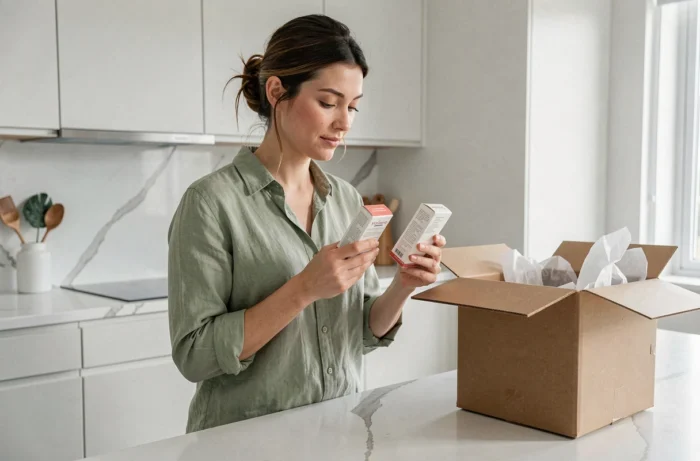
Buy now, pay later and beauty cart: a lever to handle with care
Installment payments without fees have become widespread on most cosmetics sites. Among 18-24 year-olds, buy now, pay later has become a frequent purchase trigger for beauty carts exceeding a few dozen euros.
The mechanism seems advantageous: three or four monthly payments, no interest displayed. The trap lies elsewhere.
- Installment payments encourage increasing the cart amount beyond the initial budget, as each installment seems modest when taken in isolation.
- Some providers (Klarna, Alma, PayPal) impose late fees that can exceed the cost of a traditional loan if a payment is missed.
- Multiplying installment payments across multiple sites at the same time complicates budget tracking, especially without a dedicated management app.
Buy now, pay later is justified for a significant one-time purchase (gift set, LED skincare device, or high-end epilator), not for a monthly restock of everyday products. For a cart containing shampoo and moisturizer, it’s better to pay in one go and maintain visibility over expenses.
Check the reliability of a beauty product before online purchase
Customer reviews remain the first reflex, but their reliability varies significantly from one platform to another. A few quick checks can help filter useful information.
Read negative reviews first
Five-star reviews often look alike. One or two-star reviews reveal concrete flaws: changed texture, leaking bottle, scent different from the in-store version. A product with only positive reviews and no detailed comments should raise a red flag.
Cross-check INCI lists
The composition displayed on a site does not always match that of the product actually shipped, especially on marketplaces. Comparing the INCI list (International Nomenclature of Cosmetic Ingredients) between the brand’s official site and the reseller’s product page takes two minutes. A discrepancy signals a different batch, a counterfeit, or an outdated reformulation.

Beware of permanent promotions
A product displayed on promotion all year round is not on promotion. Some sites inflate the crossed-out price to create an illusion of a discount. Comparing the price per milliliter or gram between two retailers provides a more reliable reading than the displayed percentage discount.
DIY cosmetics and second-hand: two growing alternatives
Beyond traditional channels, two trends are changing the way beauty is consumed online. The first concerns homemade cosmetics (DIY), with a proliferation of specialized sites selling raw ingredients (vegetable oils, concentrated actives, reusable containers). Several comparisons of DIY ingredient sites emerged in 2026, signaling a market that is structuring.
The second trend involves the resale of unused new beauty products between individuals. Dedicated platforms allow the purchase of gift sets received as gifts or products ordered by mistake, often at reduced prices. The main risk lies in storage conditions: a serum stored in excessive heat loses effectiveness without this being visible.
- For DIY, check that the supplier displays safety data sheets (SDS) for each ingredient and the manufacturing date of the actives.
- For second-hand, prioritize products under cellophane or with an intact tamper-proof seal.
- In both cases, note the expiration date: a natural product without preservatives rarely lasts more than a few months after opening.
Online beauty shopping is gaining more options each year, but the proliferation of channels makes comparison more demanding. The displayed price does not tell the whole story: it’s the price per milliliter, the return policy, and the traceability of the product that distinguish good deals from false promotions.