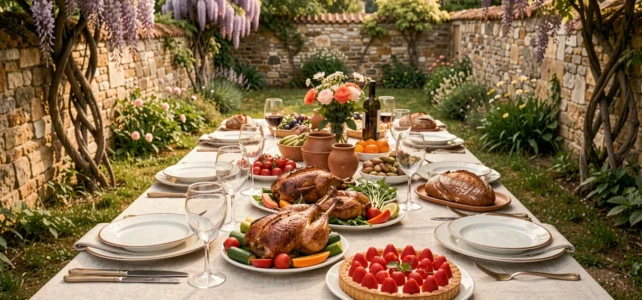
The Pentecost menu is no longer just a roast veal placed on the family table. Consumption habits are changing, preferred proteins are evolving, and creating a festive meal at the end of spring deserves a more refined approach than the perennial entry-meat-dessert triptych.
Festive Proteins for Pentecost: Beyond the Veal Reflex
Veal remains associated with festive gatherings in the French collective imagination. In out-of-home dining, the volumes of this meat have been declining since 2023-2024, hindered by high costs and competition from more accessible proteins.
We recommend treating veal as a special pleasure to be justified by its origin and cut, not as an automatic choice. A farm-raised Label Rouge veal loin, served in controlled portions with a generous vegetable accompaniment, makes more culinary sense than a standard supermarket roast.
The national trend confirms a clear increase in quality pork and free-range poultry on French plates, including for festive meals at home. A herb-crusted pork tenderloin or a roasted guinea fowl with spring vegetables are credible alternatives, often more flattering in terms of value for money. You will also find the Pentecost menu offered by L’Entracte Gourmand built around this logic of well-chosen proteins rather than default meat.
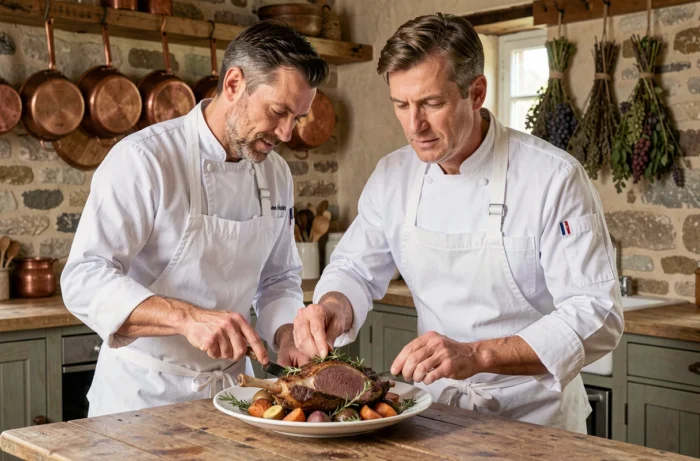
Pairing Seasonal Vegetables with the Pentecost Menu
Pentecost falls right in the window of spring vegetables. This is a parameter that most online menus treat as a decorative detail, whereas it should structure the meal.
Asparagus, fresh peas, fava beans, and radishes are not mere garnishes. They are central elements that dictate cooking methods, textures, and sauces. An appetizer built around lightly sautéed green asparagus with a fresh herb emulsion is worth more than a reheated pastry.
Building the Menu Around the Market, Not the Other Way Around
We often see Pentecost menus thought out backwards: one chooses the meat, then looks for what to put around it. The reverse approach works better for a meal at the end of May or early June.
- Identify three to four vegetables at their peak season at the market or from the greengrocer, then adapt the protein accordingly
- Favor quick cooking methods that preserve the crunch and color of spring vegetables, rather than long braises that crush their character
- Reserve fresh herbs (chervil, tarragon, chives) for finishing touches, never for prolonged cooking where they lose all aromatic interest
This principle has a practical advantage: the cost of the menu mechanically decreases when vegetables take center stage.
Preparation the Day Before and Time Management on Pentecost Day
A successful festive meal is played out the day before. The constraint is not technical, it is logistical. Separating tasks between the day before and the day itself allows for more time at the table rather than in the kitchen.
What Benefits from Resting Overnight
Terrines, savory cakes, meat marinades, and cream-based desserts (panna cotta, crème brûlée) develop their flavors after a night in the refrigerator. Vinaigrettes and cold sauces also stabilize better with a few hours of rest.
What Must Be Done on the Day Itself
Any cooking of green vegetables (asparagus, beans, peas) should be done last minute to preserve color and texture. Roasted meats can be started on the day itself, but can rest under aluminum foil during the service of the appetizer without losing quality.
The key is to limit the number of tasks to three on the day itself: cooking the main protein, final seasoning of the vegetables, and plating. Everything else can be prepared in advance.

Pentecost Dessert: Focus on Seasonal Fruits Rather Than Heavy Pastries
By the end of May, French strawberries reach their full flavor maturity. Cherries begin to arrive. Building a dessert around these fruits, without drowning them in cream or sugar, provides a coherent finale that aligns with the spring spirit of the meal.
A simple strawberry vacherin, a thin cherry tart with Breton shortbread, or strawberries marinated with basil and Timut pepper offer clean finishes. The Pentecost dessert should be light and fruity, especially after a generous main course.
- Gariguette or Ciflorette strawberries in a salad, with olive oil and fleur de sel for a five-minute dessert
- Warm cherry clafoutis, prepared the day before and reheated ten minutes before serving
- Pavlova with red fruits, whose meringue is prepared two days in advance and garnished at the last moment
These three options cover different levels of difficulty and can all be largely prepared in advance.
Wines and Pairings for a Balanced Pentecost Meal
The classic pitfall of the Pentecost menu is the overly powerful red served out of festive reflex. At the end of spring, with spring vegetables and white meats or pork, a light red or a structured white pairs better than a tannic wine.
A lightly chilled Côtes-du-Rhône Villages works well with guinea fowl or pork tenderloin. A white Burgundy (Saint-Véran, Mâcon-Villages) accompanies veal with asparagus without overwhelming the dish. For the aperitif, a Crémant from Loire or Alsace brings the festive dimension without the champagne budget.
The most underestimated pairing remains that of dessert: a Muscat de Beaumes-de-Venise or a Coteaux-du-Layon on strawberries creates a memorable finish that your guests will remember more than the main course.