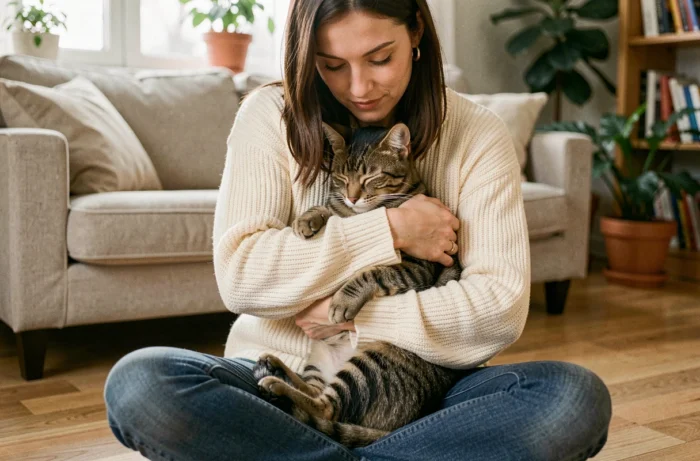
Adopting a cat refers to the transfer of responsibility for a feline from a shelter, an association, or an individual to a new home. In France, this process involves specific legal obligations, including identification by microchip and the signing of an adoption contract. With over 6,500 cats taken in by the SPA during the summer of 2026 alone, shelters remain the primary entry point for welcoming a feline.
Mandatory Identification and Adoption Contract: The Legal Framework in France
Before any transfer, a cat must be identified by microchip or tattoo. This obligation applies to both shelters and individuals giving away an animal. The identification is recorded in the national I-CAD database, which allows for the owner to be located in case of loss or theft.
The adoption contract signed at the shelter outlines the commitments of the new owner: sterilization if it has not already been done, veterinary follow-up, and suitable living conditions. Some associations include a return clause if the adopter can no longer keep the animal.
As of January 1, 2024, the sale of cats in pet shops is prohibited in France. Stores can only organize adoption days in partnership with associations, in the presence of volunteers. This measure, stemming from the law of November 30, 2021, against animal cruelty, automatically directs future adopters towards shelters and registered breeders.
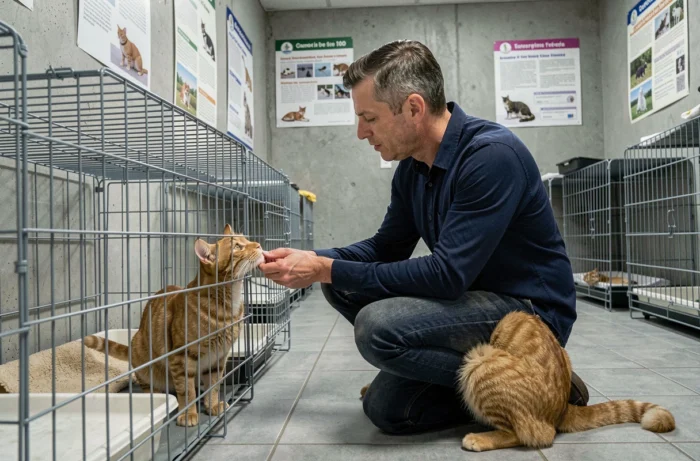
To discover cats on Ado PCJE, the online profiles allow you to view the profile, age, and character of each animal before visiting.
Adult Cat or Kitten: Choosing Criteria That Change Daily Life
A kitten requires constant vigilance in the first months. It scratches, nibbles, climbs everywhere, and needs several meals a day. Its definitive character only reveals itself after several months, leaving a degree of uncertainty.
An adult cat adopted from a shelter has a concrete advantage: its temperament is already known by the volunteers. Behavior profiles provide information about its sociability with other animals, tolerance to children, and activity level. For a first-time adopter or a household with a calm lifestyle, an adult cat aged three to seven years reduces the adjustment period.
The question of breed often arises. Domestic cats (or European cats) make up the vast majority of shelter residents. Their genetic robustness, linked to the absence of intensive selection, generally results in fewer predispositions to certain hereditary diseases than purebred cats.
Two Cats Instead of One
Adopting a pair, especially two kittens from the same litter, limits destructive behaviors related to boredom. Cats stimulate each other, play together, and manage better during their owner’s absence. The additional cost for food and litter remains moderate compared to the gain in animal well-being.
Cat Adjustment Period: Common Mistakes to Avoid
The first days shape the entire relationship. Most returns to the shelter occur in the weeks following adoption, often due to poorly calibrated expectations.
- Letting the cat roam freely throughout the home upon arrival is the first mistake. It needs a quiet, separate room with its litter box, food bowl, and a high perch. Three to five days in this space are sufficient for it to establish its olfactory landmarks.
- Suddenly changing its diet causes digestive issues. Shelters indicate the brand of kibble used: keep it for at least two weeks, then gradually transition over about ten days.
- Forcing physical contact with a fearful cat prolongs the adjustment period. Sitting quietly in the room without seeking to touch, speaking softly to it, and allowing it to approach on its own accelerates trust-building.
The presence of another animal in the home complicates the arrival. A gradual introduction, through scent exchange (blankets, cushions) before any visual contact, reduces the risks of territorial conflict. Plan for at least a week of physical separation between the two animals.

Veterinary Budget and Recurring Costs After Adoption
Adoption fees at shelters generally cover sterilization, initial vaccinations, and identification. This flat fee is significantly lower than the actual cost of these procedures at a private veterinarian.
After adoption, the most underestimated expense is the annual veterinary follow-up. Booster vaccinations, deworming, and parasite treatment: these regular preventive care measures avoid heavy emergency expenses. An indoor cat is not exempt from this follow-up, contrary to popular belief, as even a cat that never goes outside must be identified and vaccinated against certain diseases.
Feeding represents the second expense. Quality kibble, appropriate for the cat’s age and sterilization status, forms the basis. Bi-nutrition (kibble and wet food) improves hydration, a critical point for felines that naturally drink little.
Litter and Accessories
The litter box must be cleaned daily. A clumping plant-based litter makes maintenance easier. Regarding accessories, a scratching post or cat tree protects furniture and meets the natural marking needs. Interactive toys (feather wands, balls) enhance the environment, especially for a cat living in an apartment.
The summer of 2026 showed a notable phenomenon: despite a record number of abandonments in SPA shelters, adoptions also reached a historic level, with over 8,200 animals placed between July and August. This dual movement means that shelters are taking in and circulating animals more quickly, but they remain under constant pressure. Adopting a cat from a shelter today means freeing up a space for another animal in need.