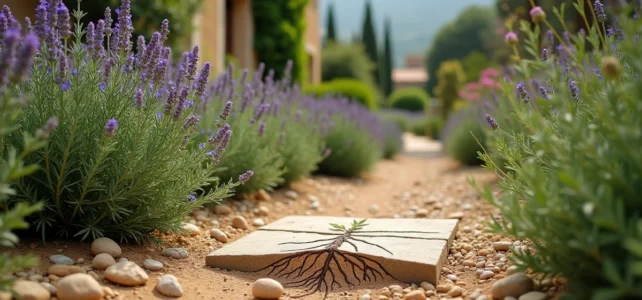
Which garden plants offer the best deep rooting, and on what criteria can they be compared? Root depth, drought resistance, soil type tolerance, and maintenance requirements vary significantly from one species to another. This ranking is based on the vertical anchoring ability of each plant, its water autonomy once established, and its usefulness in stabilizing terrain or limiting erosion.
| Plant | Type | Rooting | Suitable Soil | Maintenance |
|---|---|---|---|---|
| Alfalfa | Herbaceous perennial | Very deep (several meters) | Drained, calcareous | Very low |
| Pubescent oak | Tree | Deep taproot | Calcareous, dry | Almost none |
| Common viper’s bugloss | Biennial | Deep taproot | Dry, stony | None |
| Lavender | Shrubby sub-shrub | Marked taproot | Drained, poor | Annual pruning |
| Common sage | Aromatic perennial | Deep taproot | Light, calcareous | Low |
| Yarrow | Perennial | Deep + spreading | Any drained type | Very low |
| Wild chicory | Perennial | Very deep taproot | Clayey to calcareous | None |
| Broom | Shrub | Deep taproot | Acidic, sandy | Low |
| Rosemary | Shrubby sub-shrub | Branching taproot | Dry, drained | Light pruning |
| Spurge | Perennial | Deep taproot | Dry, stony | Very low |
Among the garden plants with deep roots on Ambiance et Déco, several of these species stand out for their vertical anchoring and resilience in the face of prolonged drought episodes.
1. Alfalfa: the taproot that goes the deepest
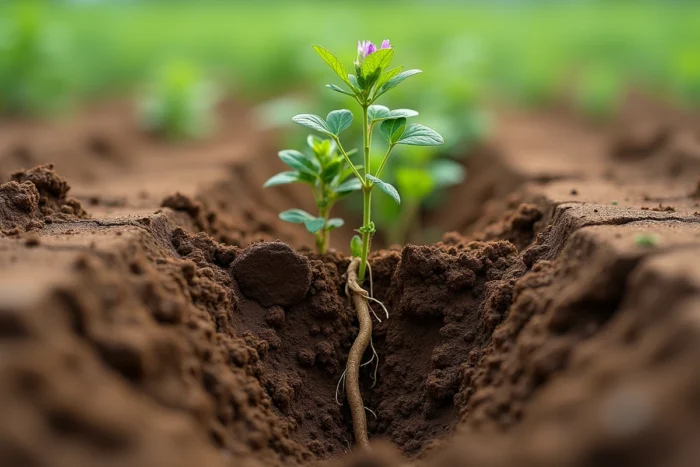
Alfalfa develops a root system that can reach several meters deep, making it the reference among herbaceous plants with vertical rooting. This ability allows it to access water reserves that most garden plants cannot exploit.
It tolerates calcareous and drained soils, and requires no watering once established. Its role is not limited to anchoring: it fixes atmospheric nitrogen, enriching the soil deeply for neighboring plants.
2. Pubescent oak: the quintessential dry soil tree
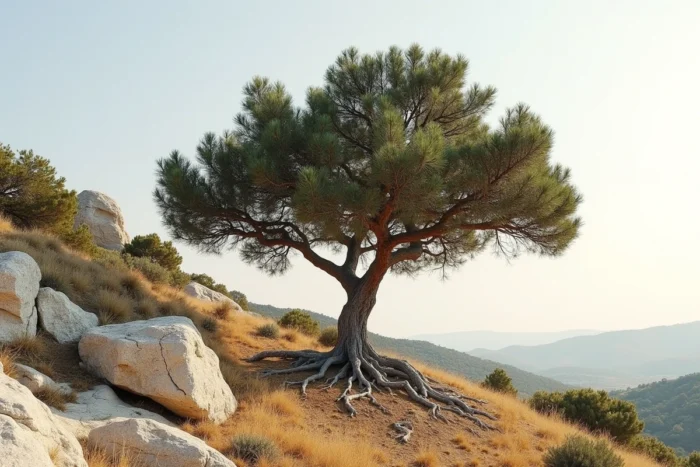
The pubescent oak forms a deep taproot in its early years, before developing a secondary lateral network. This root architecture provides remarkable stability on sloped or wind-exposed terrains.
It thrives in calcareous and dry soil, where many trees struggle. However, its slow growth requires patience: several years are needed before it provides shade. It is a long-term choice for a garden structured around resilience.
3. Common viper’s bugloss: vertical anchoring in stony soil
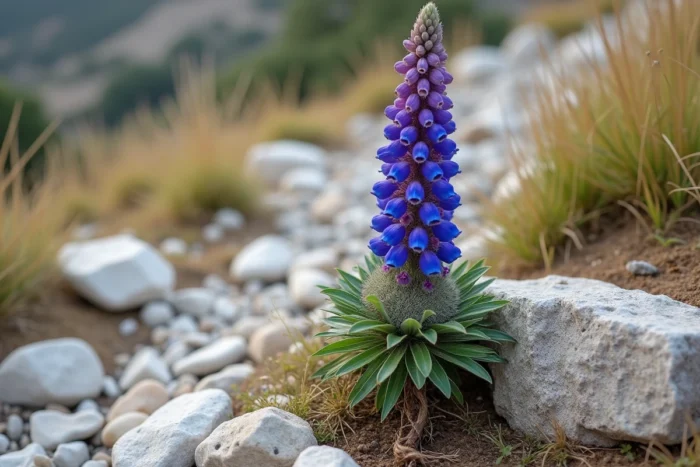
The common viper’s bugloss is among the recommended plants for stabilizing slopes and inclines thanks to its vertical anchoring. Its taproot penetrates stony soils where few species take root. It requires absolutely no maintenance.
Its interest goes beyond simple soil retention. The viper’s bugloss attracts a large number of pollinators, especially wild bees, thanks to its prolonged flowering with blue spikes. It is a relevant option for the most inhospitable garden areas.
4. Lavender: taproot and water autonomy
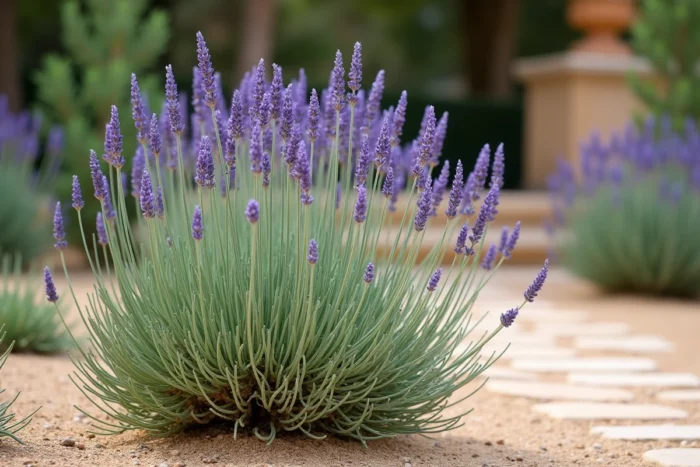
Lavender develops a marked taproot that allows it to withstand weeks without rain. Its deep rooting explains why it tolerates poor soils and scorching exposures so well.
The only constraint is: well-drained soil is essential, as stagnant moisture is fatal to it. A pruning after flowering is enough to keep it compact. It remains one of the most reliable choices for a water-autonomous flowerbed.
5. Common sage: root depth and calcareous soil
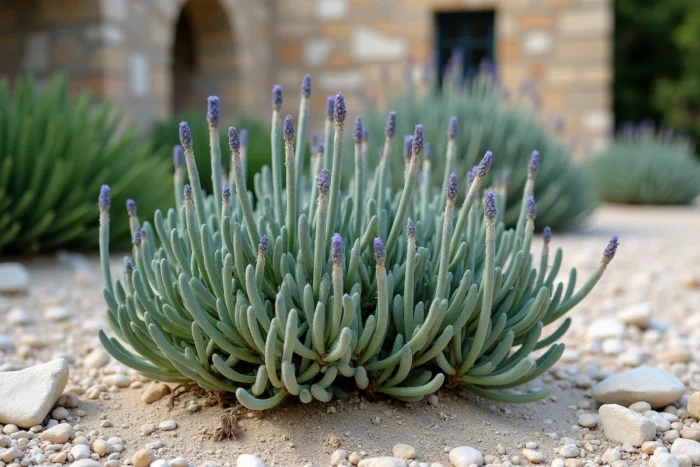
Common sage drives its taproot into light, calcareous soils, making it almost autonomous once established. Its persistent gray-green foliage structures a flowerbed all year round.
It withstands poor soils and dry periods without flinching. Sage combines well with lavender and rosemary in a deep-rooted aromatic garden, where each plant accesses its own water layer.
6. Yarrow: deep rooting and quick coverage
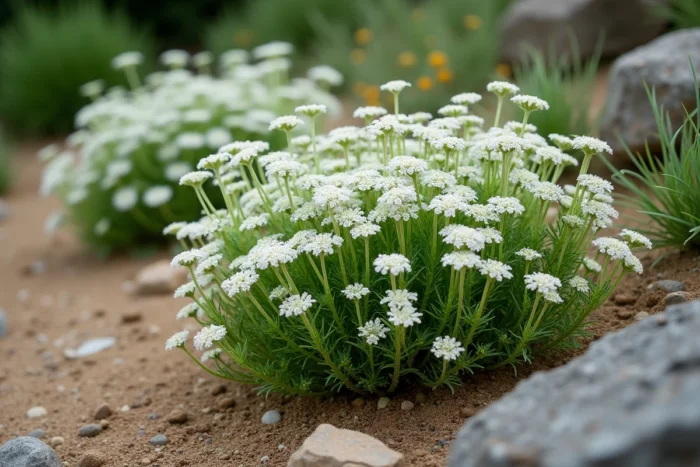
Yarrow has a root system that is both deep and spreading. This dual strategy allows it to quickly colonize a space while accessing water deeply.
It grows in almost all types of drained soil and tolerates very dry conditions. Its flowering in white or yellow umbels attracts beneficial garden insects. It is a perennial to prioritize for quickly covering difficult terrain without watering.
7. Wild chicory: the taproot of heavy soils
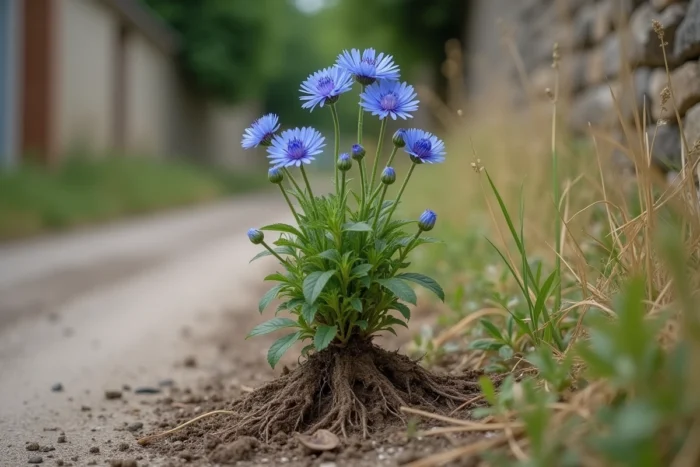
Wild chicory stands out for its ability to drive its taproot into clayey to calcareous soils, where most deep-rooted species struggle to penetrate. Its blue flowers open in the morning and close by midday.
It requires no care and self-seeds spontaneously. For a garden on heavy clay soil, chicory is one of the few reliable options for working the soil deeply through its roots.
8. Broom: deep rooting in acidic soil
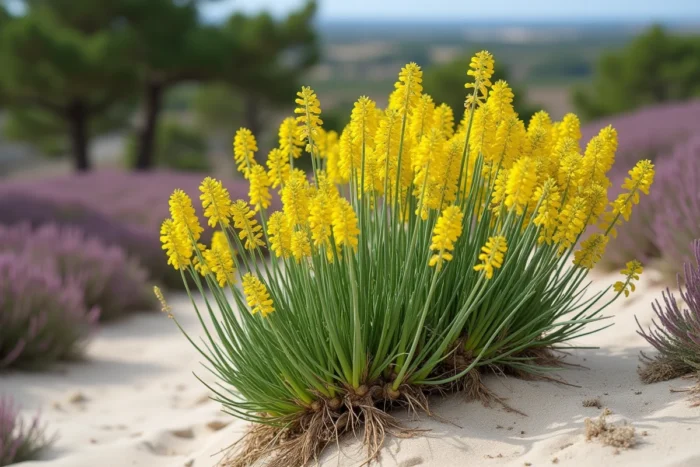
Broom occupies a niche that few deep-rooted plants cover: acidic and sandy soils. Its taproot anchors firmly in these filtering terrains where water quickly disappears deep down.
Like alfalfa, it fixes atmospheric nitrogen and improves soil fertility. Its bright yellow flowering in spring adds color to areas often considered infertile.
9. Rosemary: branching taproot and zero watering
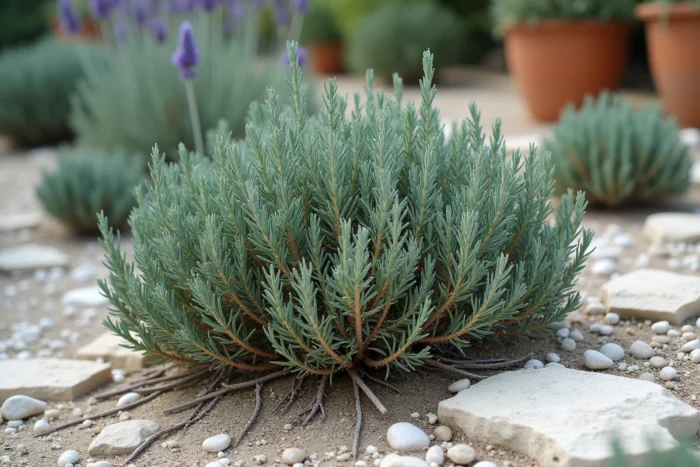
Rosemary develops a taproot that branches deeply, ensuring water supply even in very dry soil. Its hardiness and aromatic evergreen foliage make it a staple in low-maintenance gardens.
It shares with lavender and sage an absolute requirement for drainage. A waterlogged soil in winter kills it more surely than summer drought. In suitable soil, it can live for decades without intervention.
10. Spurge: taproot in stony terrain
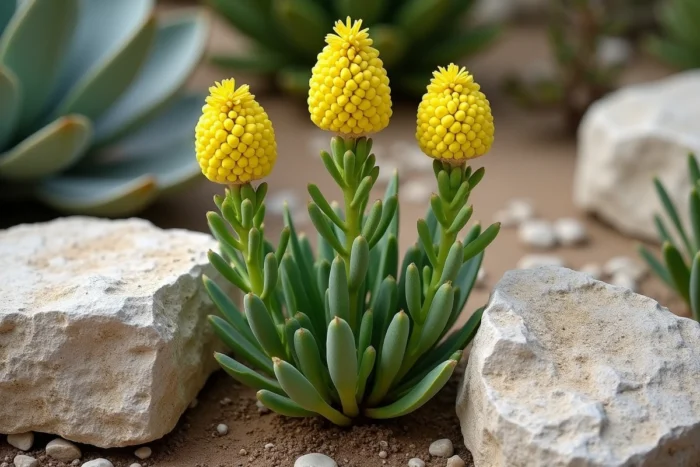
Spurge roots deeply in stony and dry soils where most perennials do not survive. Its architectural form and green-yellow inflorescences make it a plant that is both structuring and autonomous.
It requires neither watering nor fertilizing and withstands high heat. Its irritating sap protects it from herbivores, further reducing the need for monitoring. For the driest areas of the garden, it is a safe bet.
The common thread among these ten plants lies in one strategy: deep and spaced watering at installation forces the roots to go down, where frequent superficial watering would keep them near the surface. This protocol conditions the success of deep rooting in the long term, regardless of the chosen plant.