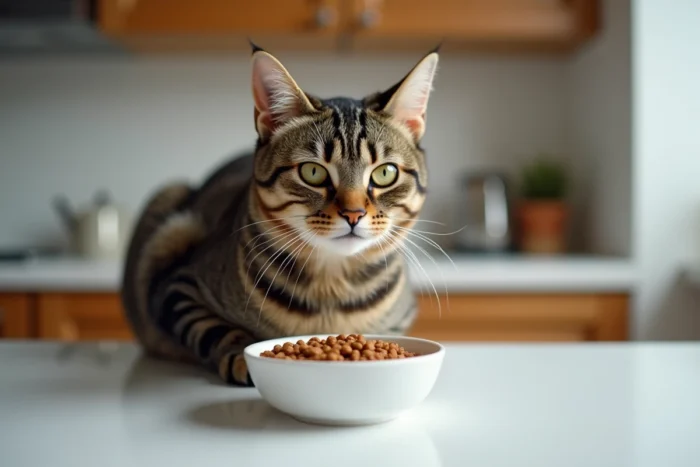
Sheba presents itself as a premium cat food brand, but its formulations deserve a detailed nutritional examination. Here, we analyze Sheba food from a nutritional perspective, identifying the points of concern revealed by label reading and the clinical situations where this type of pâté remains useful.
Phosphorus levels and mineral profile of Sheba pâtés: an underrated angle
The mineral profile of a pâté directly influences its compatibility with a cat that has renal insufficiency or is elderly. Crude protein and ingredient lists alone are not enough to make a decision.
Sheba does not systematically publish the calcium/phosphorus ratio or the phosphorus level on a dry matter basis for each reference. This opacity prevents validation or exclusion of a recipe for a cat whose renal function is declining. We recommend contacting Mars Petcare’s consumer service to obtain this data before incorporating Sheba into a senior cat’s diet.
In consultation, a veterinary opinion on Sheba food is precisely based on this reading of the mineral profile, not just on the ingredient list.
Without accessible phosphorus data, no serious clinical validation is possible. This is the main limitation for practitioners who would like to recommend this brand to fragile cats.
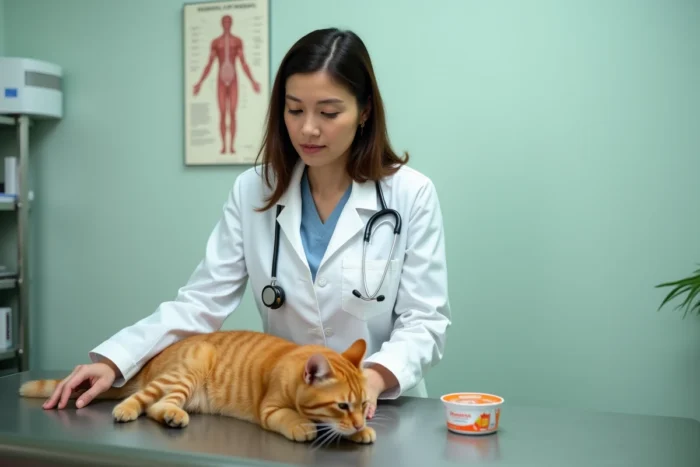
Sheba Composition: Animal By-products and Group Labeling
Sheba recipes use the term “meats and animal by-products” without detailing the respective share of muscle, noble offal, or carcass. This formulation, compliant with European regulations on pet food labeling, remains an indicator of variable raw materials from batch to batch.
For practitioners, group labeling poses a concrete problem: it is impossible to trace a specific allergen. A cat suspected of having a food allergy to beef cannot be fed a recipe listing “meats and animal by-products (including 4% beef)” if the rest of the animal proteins are not identified.
Sugars and thickeners in sauces
Several references from the Sauce Collection range contain added sugars. These sugars serve as palatability enhancers and texturizers. Their presence is not toxic in the short term, but added sugars have no nutritional justification in cats, a species lacking functional sweet taste receptors like omnivores.
We also observe the presence of grains in some recipes, used as binders. The cat, a strict carnivore, tolerates small amounts of starch, but these ingredients increase the carbohydrate load without significant protein contribution.
Sheba’s nutritional score compared to other cat pâtés
Sheba has one of the lowest usage costs among cat pâtés, but its compositional quality scores remain behind. This gap summarizes the brand’s positioning: a good palatability/cost ratio, not a reference food in terms of nutrition.
| Criterion | Score Cats.com | Comment |
|---|---|---|
| Price | 9/10 | One of the lowest usage costs in pâté |
| Species appropriateness | 6/10 | Animal proteins present but poorly traceable |
| Ingredient quality | 6/10 | Group labeling, sugars and grains in some recipes |
This table illustrates why Sheba is suitable as a palatability supplement, not as an exclusive base for an optimized diet. The attractive price is appealing, but the compositional quality remains behind compared to brands that detail each protein source.
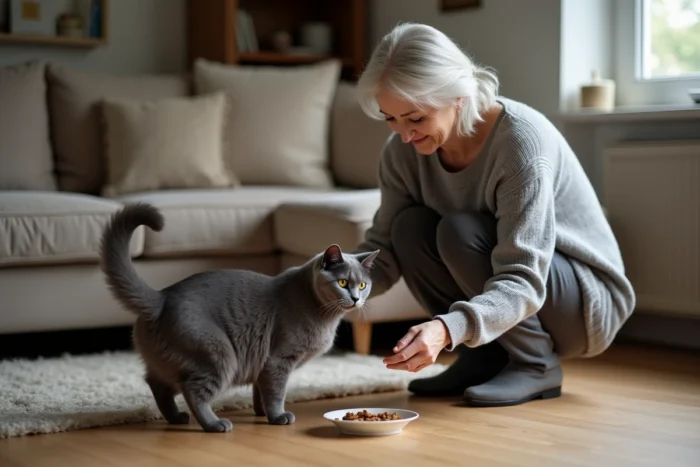
Sheba Kitten Range: Complete Formulation or Simple Marketing Variation
Sheba now offers a range specifically formulated for kittens, presented as “complete and balanced” on the official website. Competing content rarely addresses this range, focusing instead on adult products.
For a kitten food to be truly suitable, it must have a higher protein content than the adult range, a controlled calcium/phosphorus ratio for bone growth, and documented DHA content. In the absence of detailed analytical data published by Sheba on these parameters, we cannot confirm that this range meets the requirements of a growing kitten at the same level as a veterinary food.
- Check the protein level on a dry matter basis (ideally above 40% for a kitten)
- Ask the manufacturer for the exact calcium/phosphorus ratio of the batch
- Ensure that the label states “complete food” and not “complementary food”
Sheba’s Palatability and Clinical Utility in Difficult Cats
Where Sheba truly stands out is in palatability. The palatability of Sheba pâtés is a measurable clinical asset in anorexic or very selective cats. A hospitalized cat that has refused all food for several days will often accept a Sheba pâté in sauce when other brands fail.
This characteristic can be explained by the combination of shredded textures in sauce, animal fats, and probably those same sugars that we criticize nutritionally. The paradox is real: the elements that weaken the composition are those that save food intake in an emergency context.
We occasionally use Sheba as a transitional refeeding tool, never as a staple diet. This distinction changes the way we evaluate the brand: a food with mediocre composition can provide a clinical service that “perfect” pâtés on paper do not, due to insufficient palatability.
- Convalescent cat post-surgery refusing prescribed recovery foods
- Senior cat with chronic decreased appetite, in addition to an appropriate food
- Cat undergoing medication treatment affecting taste (e.g., methimazole)
Sheba remains an industrial pâté with average composition, whose true value lies in its exceptional palatability and accessible price. For a healthy cat fed with a better-traceability food base, occasional rotation of Sheba poses no problem. For a fragile cat, the question of the mineral profile remains open as long as Mars Petcare does not publish this data transparently.