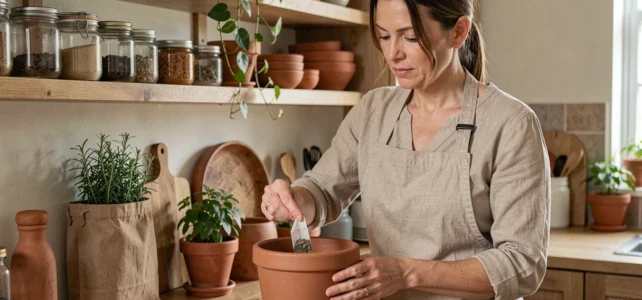
We take the bag out of the cup, press it mechanically against the spoon, and it ends up in the nearest trash can. The problem is that this trash can is not always the right one. Depending on the composition of the bag, the eco-friendly gesture can turn into contamination of the recycling bin or compost. Knowing how to properly dispose of tea bags first requires understanding what we are holding between our fingers.
Compostable bag or composite bag: the quick test before throwing away
The majority of sorting errors stem from a simple confusion: we believe that all tea bags are made of paper, and therefore biodegradable. In reality, many contain nylon, polypropylene, or a thin layer of heat-sealed plastic that makes them unsuitable for composting.
To tell the difference in just a few seconds, we can rely on three concrete clues.
- Texture: a 100% paper or plant fiber bag tears easily, like coffee filter paper. A composite bag resists, stretches slightly, and often has a silky or shiny appearance.
- Sealing: paper bags are generally stapled or folded. Those that are heat-sealed (smooth, melted edges, with no visible staples) almost always contain some plastic.
- Pyramid-shaped bags made of transparent material: unless explicitly stated “PLA compostable” or “corn starch” on the packaging, treat them as plastic.
When we want to dispose of our tea bags correctly, this ten-second visual sorting avoids the false good gesture. A composite bag thrown into compost does not decompose: it fragments plastic into the soil.
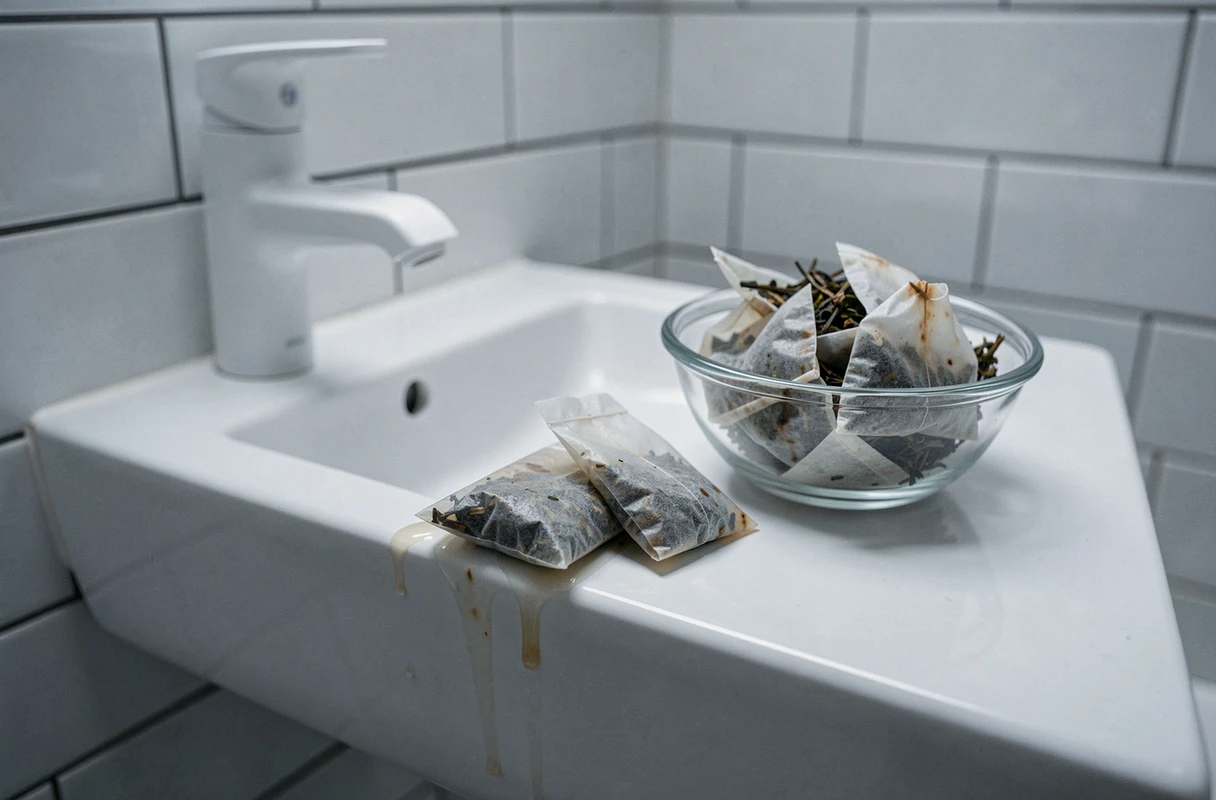
Sorting used tea bags: which bin for which material
Once we have identified the nature of the bag, the sorting gesture becomes clear. We distinguish two scenarios.
Paper or natural fiber bag without staples
We throw it whole into the organic waste bin or into the home composter. The tea leaves and the envelope will decompose together in a few weeks. Remember to let it cool and dry slightly before placing it, especially in a closed composter, to avoid mold and bad odors.
Composite or plasticized bag
The right reflex is to separate the contents from the envelope. We tear the bag, empty the tea leaves into the organic waste bin (or at the base of a plant), and put the envelope in the household waste bin. Composite materials are currently not recycled in any common selective sorting stream in France.
Emptying the bag and then throwing the envelope into the correct stream remains the most reliable gesture when in doubt about the composition. Several recent sources confirm that putting a plasticized bag into compost “by default” does more harm than good.
Reusing a tea bag before throwing it away: practical daily uses
Before reaching the trash, a used bag can still be useful. We are not talking about anecdotal crafts, but about reuses that concretely reduce everyday waste.
Natural deodorizer for the refrigerator or shoes: a dried bag absorbs odors for several days. We place it on a dish at the bottom of the fridge or slip it into a pair of sneakers. Black tea works better than green tea for this use, thanks to its higher tannin content.
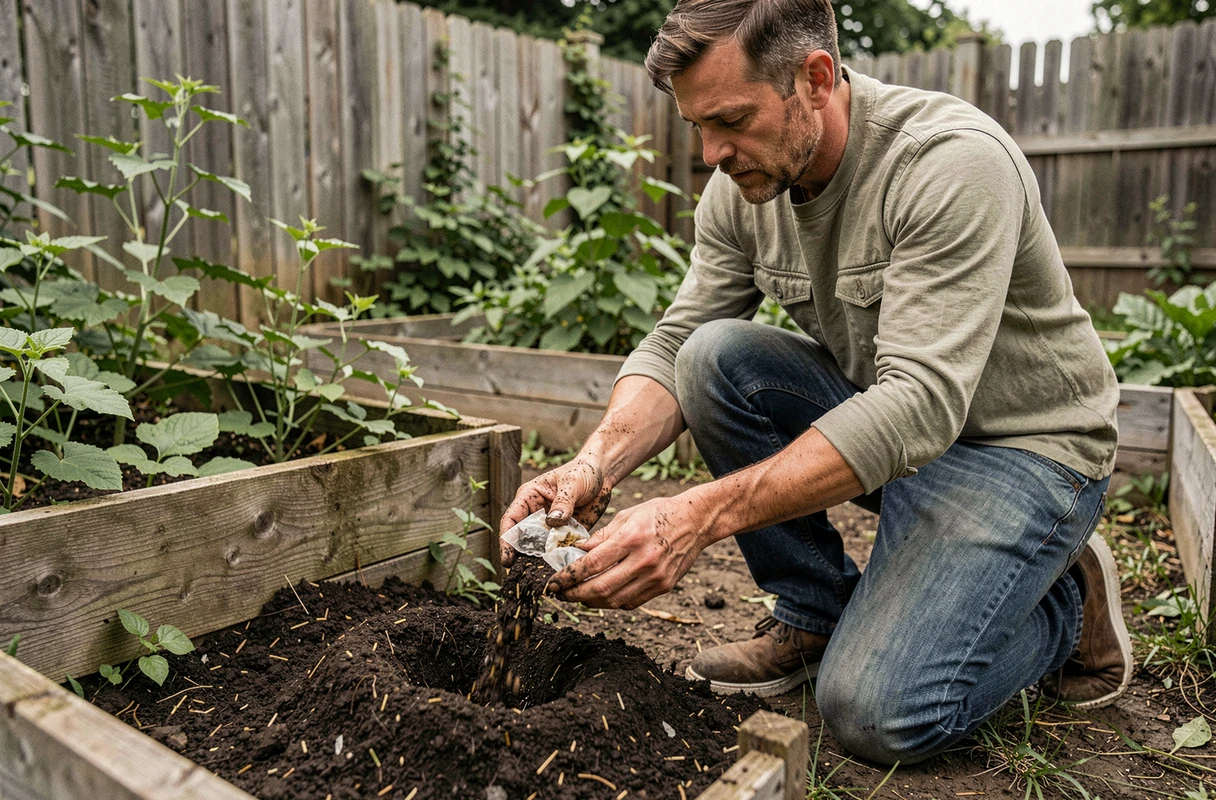
In the garden, tea leaves (removed from the bag if it is composite) enrich the soil with organic matter. We mix them directly into the potting soil of potted plants or add them to the compost. It is not a miracle fertilizer, but a regular supply of nitrogen-rich material that improves soil structure.
For cleaning, a damp bag passed over a window or mirror leaves a film of tannins that facilitates polishing. Feedback varies on this point: the effect depends on the type of tea and the hardness of the local water, but on lightly soiled glass, the result is visible.
Reducing packaging at the source: switch to loose tea
The best waste is the one we do not produce. Switching to loose tea eliminates the bag, its individual packaging, and often the plastic-coated cardboard box that contains them.
Specifically, we need a reusable filter (stainless steel or fabric) and an airtight container to store the leaves. The investment is minimal and the cost per gram of loose tea is often lower than that of bagged tea.
For those who prefer the bag format for convenience (office, travel), some brands now offer unbleached paper bags, without staples or heat sealing. They can be identified by the mention “industrial compostable” or “OK compost home” on the packaging. These labels guarantee complete disintegration in a home composter, unlike vague mentions like “natural materials” that commit to nothing.
The eco-friendly gesture around tea does not stop at the moment we throw away the bag. It starts in the store aisle, when we choose between a product wrapped in plastic and a product whose entire packaging can return to the earth. Reading the label before purchase avoids the dilemma in front of the trash can.