
Salting cooking water or broth is not a matter of intuition. Behind the mechanical gesture of a pinch of salt lie precise ratios, varying according to the food, the volume of water, and the desired result. What concentration of salt per liter of water should be aimed for pasta, vegetables, soup, or brine? The differences between these uses can sometimes be considerable.
Grams of salt per liter of water: comparative table by preparation
The dosages vary from simple to quintuple depending on what is being cooked or prepared. This table gathers the most common ratios in home and professional cooking.
| Preparation | Salt per liter of water | Practical reference |
|---|---|---|
| Pasta (rule 1/10/100) | 10 g/L | 1 heaping tablespoon of fine salt |
| Green vegetables (beans, broccoli) | 7 to 10 g/L | Water quite salty, close to pasta |
| Potatoes, rice | 5 to 7 g/L | Moderately salted water |
| Homemade soup or broth | 2 to 4 g/L | Adjustment at the end of cooking |
| Pizza dough (kneading water) | about 35 g/L of water | Baker’s ratio, controlled fermentation |
| Light brine (lacto-fermented vegetables) | 20 to 30 g/L | Preservation, not cooking |
The most telling line is that of pizza dough: the salt in the kneading water reaches about 35 g per liter, which is more than three times the concentration used for cooking pasta. This technical ratio, common among professional pizzaiolos, regulates yeast fermentation and structures the gluten network.
To determine the right amount of salt per liter of water in your own recipes, the table above serves as a reliable starting point, to be refined according to the type of salt used and the already salted ingredients present in the recipe.
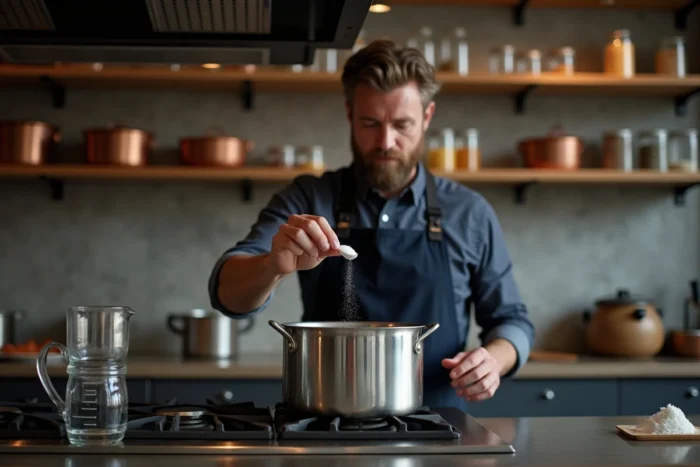
Cooking pasta: the rule 1/10/100 and its implications
In Italian cuisine, the reference ratio can be summarized in three numbers: 1 liter of water, 10 g of salt, 100 g of pasta. This proportion ensures sufficiently salty water to season the pasta from the inside during cooking, while allowing for regular hydration of the gluten.
French public content often settles for recommending to “salt generously” without specifying a ratio per liter. The difference between 5 g and 10 g of salt per liter is, however, perceptible on the palate. At 5 g/L, the spaghetti remains bland in the center. At 10 g/L, the salt penetrates the pasta and reduces the need to re-salt on the plate.
Why salt after boiling
Adding salt once the water is boiling is not a detail. Salt dissolved in cold water can accelerate the corrosion of the bottom of certain stainless steel pots. From a culinary perspective, dissolution is almost instantaneous in water at 100 °C, making late addition as effective as early addition.
Salt in soups, sauces, and broths: dose low, adjust late
For a soup or broth, the logic reverses compared to pasta. The cooking water is not discarded: it becomes the dish. Starting with 2 to 4 g of salt per liter of water is sufficient at the beginning of cooking, as the concentration naturally increases as the liquid reduces.
A liter of broth salted at 3 g/L that reduces by half reaches 6 g/L in the bowl. Salting a tomato soup or cream sauce too early therefore doubles the final dosage unintentionally. The professional rule is simple: adjust the seasoning at the end of cooking, after reduction.
- Commercial bouillon cubes already contain a high proportion of salt (often half their weight). One cube added to a liter of water can provide all the necessary salt.
- Soy sauce, miso, and capers are high-sodium ingredients. Their presence in a recipe requires reducing or even eliminating the salt added to the water.
- A salad dressed with a salty vinaigrette does not require salting the cooking water of the vegetables that compose it as strongly as for a hot dish served plain.
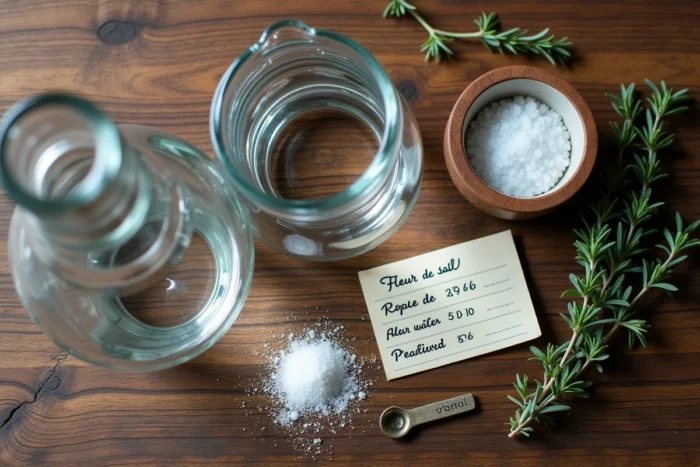
Fine salt, coarse salt, fleur de sel: the type of salt modifies the actual dosage
Ten grams of fine salt and ten grams of coarse salt weigh the same on a scale, but a tablespoon of fine salt contains more salt than a tablespoon of coarse salt. The grain size changes the volume occupied for the same weight. Dosing “by the spoon” without weighing introduces a margin of error that can reach double the intended dosage.
Coarse salt dissolves more slowly. In boiling cooking water, the difference is negligible. In warm kneading water for pizza dough, the incomplete dissolution of large crystals creates pockets of salt that disrupt fermentation. Fine salt is preferable for any use where rapid and homogeneous dissolution is required.
Fleur de sel and finishing salt
Fleur de sel is not meant to be dissolved in a liter of water. Its interest lies in its crunchy texture and complex flavor (mineral notes, slight humidity). Using it in cooking water amounts to wasting an expensive product without any taste benefit. It is reserved for finishing: on a lightly sautéed salmon, grilled vegetables, or a chocolate cream.
Adapting salt to dietary constraints and taste
Nutrition recommendations place daily salt consumption at a level often exceeded by common habits. Reducing salt in cooking water is a direct lever.
- Lowering the ratio to 5 g/L for pasta instead of 10 g/L reduces the amount of salt absorbed by the pasta without making the dish tasteless, especially if the accompanying sauce is already seasoned.
- For a vegetable dish served with homemade tomato sauce, salting the water at 3 g/L and adjusting the sauce separately provides better control.
- Replacing part of the salt with a squeeze of lemon or fresh herbs in cold dishes (salad, tabbouleh) compensates for the decrease in sodium with other taste stimuli.
The dosage of salt per liter of water is not a fixed number. The ratio of 10 g/L for pasta and 2 to 4 g/L for soups provides a solid starting framework, but the palate remains the best measuring instrument. Tasting before re-salting, considering the already salted ingredients in the recipe, and weighing rather than measuring with a spoon: three reflexes that change the precision of seasoning.